Tested 2026-07-07 15:27:14 using Chrome 150.0.7871.46 (runtime settings)

| Metric | min | median | mean | max |
|---|---|---|---|---|
| Visual Metrics | ||||
| FirstVisualChange | 1.700 s | 2.069 s | 2.101 s | 2.533 s |
| LastVisualChange | 8.533 s | 9.767 s | 10.049 s | 11.846 s |
| SpeedIndex | 2.111 s | 3.152 s | 2.901 s | 3.440 s |
| VisualReadiness | 6.833 s | 7.234 s | 7.948 s | 9.777 s |
| VisualComplete85 | 2.700 s | 3.270 s | 3.412 s | 4.267 s |
| VisualComplete95 | 2.700 s | 4.267 s | 5.826 s | 10.511 s |
| VisualComplete99 | 8.500 s | 9.733 s | 10.026 s | 11.846 s |
| Google Web Vitals | ||||
| Time To First Byte (TTFB) | 233 ms | 258 ms | 265 ms | 303 ms |
| Largest Contentful Paint (LCP) | 1.724 s | 1.972 s | 2.072 s | 2.520 s |
| Cumulative Layout Shift (CLS) | 0.3251 | 0.3257 | 0.3271 | 0.3304 |
| More metrics | ||||
| firstPaint | 1.724 s | 1.972 s | 2.072 s | 2.520 s |
| loadEventEnd | 3.522 s | 5.058 s | 5.213 s | 7.060 s |
| CPU | ||||
| Total Blocking Time | 862 ms | 1.670 s | 1.823 s | 2.936 s |
| Max Potential FID | 386 ms | 575 ms | 912 ms | 1.774 s |
| CPU long tasks | 9 | 9 | 13 | 22 |
| CPU last long task happens at | 11.075 s | 11.651 s | 12.586 s | 15.031 s |
Run 2 SpeedIndex median
Use --filmstrip.showAll to show all filmstrips.
 0 s0.7 sCPU Long Task duration 168 ms1 sCPU Long Task duration 1.272 s2.4 sCPU Long Task duration 82 ms
 2.6 sFirst Contentful Paint 2.520 sLCP <P> 2.520 sFirst Visual Change 2.533 sCPU Long Task duration 350 ms
 2.7 s
2.7 s 2.8 s
2.8 s 2.9 s
2.9 s 3 s
3 s 3.1 sCPU Long Task duration 270 ms
 3.2 s
3.2 s 3.3 s
3.3 s 3.4 sLayout Shift 0.29367 3.305 s
 3.5 sCPU Long Task duration 469 ms
 3.6 s
3.6 s 3.7 s
3.7 s 3.8 s
3.8 s 3.9 s
3.9 s 4 sDOM Content Loaded Time 3.952 s
 4.1 s
4.1 s 4.2 sCPU Long Task duration 52 msLayout Shift 0.03148 4.188 s
 4.3 sVisual Complete 85% 4.267 sVisual Complete 95% 4.267 s
 4.4 sCPU Long Task duration 575 ms
 4.5 s
4.5 s 4.6 s
4.6 s 4.7 s
4.7 s 4.9 s
4.9 s 5 s
5 s 5.1 sPage Load Time 5.057 s
 5.2 s
5.2 s 5.3 s
5.3 s 5.4 sFully Loaded 5.361 s
 5.5 s
5.5 s 5.6 s
5.6 s 5.7 s
5.7 s 5.8 s
5.8 s 5.9 s
5.9 s 6 s
6 s 6.1 s
6.1 s 6.2 s
6.2 s 6.3 s
6.3 s 6.4 s
6.4 s 6.5 s
6.5 s 6.6 s
6.6 s 6.7 s
6.7 s 6.8 s
6.8 s 6.9 s
6.9 s 7 s
7 s 7.2 s
7.2 s 7.3 s
7.3 s 7.4 s
7.4 s 7.5 s
7.5 s 7.6 s
7.6 s 7.7 s
7.7 s 7.8 s
7.8 s 7.9 s
7.9 s 8 s
8 s 8.1 s
8.1 s 8.2 s
8.2 s 8.3 s
8.3 s 8.4 s
8.4 s 8.5 s
8.5 s 8.6 s
8.6 s 8.7 s
8.7 s 8.8 s
8.8 s 8.9 s
8.9 s 9 s
9 s 9.1 s
9.1 s 9.2 s
9.2 s 9.3 s
9.3 s 9.4 s
9.4 s 9.5 s
9.5 s 9.6 s
9.6 s 9.7 s
9.7 s 9.8 sVisual Complete 99% 9.733 sLast Visual Change 9.767 s
The coach helps you find performance problems on your web page using web performance best practice rules. And gives you advice on privacy and best practices. Tested using Coach-core version 9.2.1.
longTasksThe page has 22 CPU long tasks with the total of 5.126 s. The total blocking time is 2.936 s and 4 long tasks before first contentful paint with total time of 1.290 s. However the CPU Long Task is depending on the computer/phones actual CPU speed, so you should measure this on the same type of the device that your user is using. Use Geckoprofiler for Firefox or Chromes tracelog to debug your long tasks.
Long CPU tasks locks the thread. To the user this is commonly visible as a "locked up" page where the browser is unable to respond to user input; this is a major source of bad user experience on the web today. However the CPU Long Task is depending on the computer/phones actual CPU speed, so you should measure this on the same type of the device that your user is using. To debug you should use the Chrome timeline log and drag/drop it into devtools or use Firefox Geckoprofiler.
fewFontsThe page has 28 font requests. Do you really need them? What value does the fonts give the user?
How many fonts do you need on a page for the user to get the message? Fonts can slow down the rendering of content, try to avoid loading too many of them because worst case it can make the text invisible until they are loaded (FOIT—flash of invisible text), best case they will flicker the text content when they arrive.
javascriptSizeThe total JavaScript transfer size is 608.8 kB and the uncompressed size is 2.2 MB. This is totally crazy! There is really room for improvement here.
A lot of JavaScript often means you are downloading more than you need. How complex is the page and what can the user do on the page? Do you use multiple JavaScript frameworks?
modernImageFormatsThe page ships 9 images (out of 13) in JPEG/PNG/GIF without a modern alternative. Wrap them in a <picture> with a <source type="image/avif"> or "image/webp" before the legacy <img>, or serve modern formats from your image pipeline directly. AVIF and WebP usually deliver 25–50% smaller files at the same quality.
AVIF and WebP routinely deliver 25–50% smaller files than JPEG and PNG at the same perceived quality, and every browser version still under support understands at least one of them. Ship modern formats either through a <picture> element with <source type="image/avif"> / "image/webp" entries in front of the legacy <img>, or directly from a content-negotiating image pipeline that returns AVIF / WebP when the client accepts it. https://web.dev/articles/serve-images-webp
firstContentfulPaintFirst contentful paint can be improved (1.972 s). It is in the Google Web Vitals needs improvement range, slower than 1.8 seconds.
The First Contentful Paint (FCP) metric measures the time from when the page starts loading to when any part of the page content is rendered on the screen. For this metric, "content" refers to text, images (including background images), <svg> elements, or non-white <canvas> elements.
cssSizeThe total CSS transfer size is 146.2 kB and uncompressed size is 1.3 MB. That is big and the CSS could most probably be smaller.
Delivering a massive amount of CSS to the browser is not the best thing you can do, because it means more work for the browser when parsing the CSS against the HTML and that makes the rendering slower. Try to send only the CSS that is used on that page. And make sure to remove CSS rules when they aren't used anymore.
| URL | Transfer | Content |
|---|---|---|
| https://www.bdwebs.com/wp-content/litespeed/css/1124c4cce28d7b4d2715dc2fd1e09aca.css?ver=e8cb6 | 137.7 KB | 1.0 MB |
| https://fonts.googleapis.com/css...oogleapis.com/css | 5.1 KB | 186.0 KB |
decodingAsyncThe page has 6 images (out of 13) without a decoding hint. Add decoding="async" to non-critical images so the browser can decode them off the main thread.
Setting decoding="async" on an <img> tells the browser it can decode the image off the main thread, which keeps the page responsive to user interactions while images are being processed. The default ("auto") leaves the choice to the browser. https://developer.mozilla.org/en-US/docs/Web/HTML/Element/img#decoding
lazyLoadingImagesThe page has 4 below-the-fold images without loading="lazy". Add loading="lazy" so the browser defers downloading and decoding them until the user scrolls them into view.
Adding loading="lazy" to an <img> tells the browser not to download or decode it until it is close to the viewport. For images that the user may never see (deep in the page, behind a tab, in a footer carousel), this saves bandwidth and main-thread time during initial render. The LCP image and any image in the initial viewport should NOT be lazy-loaded — that delays the first paint. https://developer.mozilla.org/en-US/docs/Web/HTML/Element/img#loading
cacheHeadersThe page has 3 requests that are missing a cache time. Configure a cache time so the browser doesn't need to download them every time. It will save 172 B the next access.
The easiest way to make your page fast is to avoid doing requests to the server. Setting a cache header on your server response will tell the browser that it doesn't need to download the asset again during the configured cache time! Always try to set a cache time if the content doesn't change for every request.
avoidRenderBlockingThe page has 3 blocking requests and 0 in body parser blocking (2 JavaScript and 1 CSS).
The critical rendering path is what the browser needs to do to start rendering the page. Every file requested inside of the head element will postpone the rendering of the page, because the browser need to do the request. Avoid loading JavaScript synchronously inside of the head (you should not need JavaScript to render the page), request files from the same domain as the main document (to avoid DNS lookups) and inline CSS for really fast rendering and a short rendering path.
privateAssetsThe page has 2 requests with private headers. Make sure that the assets really should be private and only used by one user. Otherwise, make it cacheable for everyone.
If you set private headers on content, that means that the content are specific for that user. Static content should be able to be cached and used by everyone. Avoid setting the cache header to private.
avoidScalingImagesThe page has 1 image that are scaled more than 100 pixels. It would be better if those images are sent so the browser don't need to scale them.
It's easy to scale images in the browser and make sure they look good in different devices, however that is bad for performance! Scaling images in the browser takes extra CPU time and will hurt performance on mobile. And the user will download extra kilobytes (sometimes megabytes) of data that could be avoided. Don't do that, make sure you create multiple version of the same image server-side and serve the appropriate one.
spofThe page has 1 request inside of the head that can cause a SPOF (single point of failure). Load them asynchronously or move them outside of the document head.
A page can be stopped from loading in the browser if a single JavaScript, CSS, and in some cases a font, couldn't be fetched or is loading really slowly (the white screen of death). That is a scenario you really want to avoid. Never load 3rd-party components synchronously inside of the head tag.
optimalCssSizehttps://www.bdwebs.com/wp-content/litespeed/css/1124c4cce28d7b4d2715dc2fd1e09aca.css?ver=e8cb6 size is 141 kB (141012) and that is bigger than the limit of 25 kB. Try to keep each CSS response under 25 kB.
Render-blocking CSS holds up the first paint until it has fully downloaded, parsed and applied, so smaller CSS files mean a faster start. Split your CSS into a small critical bundle inlined or eagerly loaded, with the rest lazy-loaded.
| URL | Transfer | Content |
|---|---|---|
| https://www.bdwebs.com/wp-content/litespeed/css/1124c4cce28d7b4d2715dc2fd1e09aca.css?ver=e8cb6 | 137.7 KB | 1.0 MB |
cacheHeadersLongThe page has 4 requests that have a shorter cache time than one year (but still a cache time).
Setting a cache header is good. Setting a long cache header (a year) is even better because the asset will stay in the browser cache across visits. For content-hashed URLs (e.g. app.4af2.css) you can safely use Cache-Control: max-age=31536000, immutable. For unversioned URLs that may change, use a revalidating strategy instead.
cumulativeLayoutShiftYou have a poor cumulative layout shift score (0.3257). It is in the Google Web Vitals poor range, with a shift higher than 0.25. You should manually check the filmstrip or video and check if it will affect the user.
Cumulative Layout Shift measures the sum total of all individual layout shift scores for unexpected layout shift that occur. The metric is measuring visual stability by quantify how often users experience unexpected layout shifts. It is one of Google Web Vitals.
unnecessaryHeadersThere are 47 responses that sets both a max-age and expires header. There are 29 responses that sets a server header.
Do not send headers that you don't need. We look for p3p, cache-control and max-age, pragma, server and x-frame-options headers. Have a look at Andrew Betts - Headers for Hackers talk as a guide https://www.youtube.com/watch?v=k92ZbrY815c or read https://www.fastly.com/blog/headers-we-dont-want.
thirdPartyThe page do more requests to third party domains (32 requests and 691.1 kB) then first party (20 requests and 758 kB). The regex .*bdwebs.* was used to calculate first/third party requests.
Do not load most of your content from third party URLs.
longHeadershttps://connect.face...en_US/fbevents.js has a header content-security-policy that is 1344 characters long. https://connect.face...en_US/fbevents.js has a header permissions-policy that is 874 characters long. https://connect.face.../1991482348063865 has a header content-security-policy that is 1344 characters long. https://connect.face.../1991482348063865 has a header permissions-policy that is 874 characters long. https://connect.face.../1468719531051894 has a header content-security-policy that is 1344 characters long. https://connect.face.../1468719531051894 has a header permissions-policy that is 874 characters long.
Do not send response headers that are too long.
referrerPolicyNo <meta name="referrer"> tag was found on the page. Set a Referrer-Policy response header (preferred) or add a meta tag, for example <meta name="referrer" content="strict-origin-when-cross-origin">.
Without an explicit referrer policy the browser falls back to the user-agent default and may leak the full URL of the previous page (including query strings) to every cross-origin request. Set a Referrer-Policy response header (preferred) or a <meta name="referrer"> tag in the document. https://developer.mozilla.org/en-US/docs/Web/HTTP/Headers/Referrer-Policy
surveillanceThe page embeds 3 resources from companies that profit from user surveillance. Consider privacy-respecting alternatives.
Embedding scripts or iframes from companies whose business model is surveillance capitalism (Google, Facebook, etc.) leaks detailed user data on every page view, often before the user has had a chance to consent. See https://en.wikipedia.org/wiki/Surveillance_capitalism for background. Prefer privacy-respecting alternatives where possible.
contentSecurityPolicyHeaderSet a Content-Security-Policy header to mitigate cross-site scripting attacks. You can start with a Content-Security-Policy-Report-Only header, which only reports violations rather than blocking them.
A Content-Security-Policy response header tells the browser which sources of script, style, and other content are allowed. The most effective form is a strict CSP using nonces or hashes together with strict-dynamic; the worst is a missing header, with unsafe-inline and unsafe-eval close behind. https://web.dev/articles/strict-csp
crossOriginEmbedderPolicyHeaderSet a Cross-Origin-Embedder-Policy header (typically require-corp or credentialless) on the document response to control cross-origin embedding.
Cross-Origin-Embedder-Policy (COEP) makes the page refuse to load cross-origin subresources unless they explicitly opt in via CORP or CORS. Together with Cross-Origin-Opener-Policy it puts the page in a cross-origin isolated context, which mitigates cross-window side-channel attacks (Spectre) and unlocks high-resolution timers and SharedArrayBuffer. https://developer.mozilla.org/en-US/docs/Web/HTTP/Headers/Cross-Origin-Embedder-Policy
crossOriginOpenerPolicyHeaderSet a Cross-Origin-Opener-Policy header (typically same-origin) on the document response to isolate the page from cross-origin windows.
Cross-Origin-Opener-Policy (COOP) lets a page sever its window-group ties to cross-origin documents that opened it or that it opens. Together with Cross-Origin-Embedder-Policy it puts the page in a cross-origin isolated context, which mitigates cross-window side-channel attacks (Spectre) and unlocks high-resolution timers and SharedArrayBuffer. https://developer.mozilla.org/en-US/docs/Web/HTTP/Headers/Cross-Origin-Opener-Policy
crossOriginResourcePolicyHeaderSet a Cross-Origin-Resource-Policy header (same-origin, same-site or cross-origin) on the document response to limit who may embed it.
Cross-Origin-Resource-Policy (CORP) is a per-response opt-in that tells the browser which origins are allowed to embed the resource. It blocks cross-origin or cross-site no-cors embedding (img, script, iframe, etc.) and is one of the building blocks of cross-origin isolation. https://developer.mozilla.org/en-US/docs/Web/HTTP/Headers/Cross-Origin-Resource-Policy
nelHeaderSet a NEL header (paired with Reporting-Endpoints) to collect connection-level error reports from the field.
The NEL (Network Error Logging) response header tells the browser to record connection-level failures (DNS, TLS, HTTP errors) and ship them to a reporting endpoint. NEL pairs with the Reporting-Endpoints / Report-To header — the page declares the endpoint group and NEL points at it. Together they give you visibility into errors that never reach your origin server. https://developer.mozilla.org/en-US/docs/Web/HTTP/Headers/NEL
permissionsPolicyHeaderSet a Permissions-Policy header to control which browser features the page can use.
The Permissions-Policy response header (the successor to Feature-Policy) lets a site explicitly opt in or out of powerful browser features such as camera, microphone, geolocation, payment and clipboard. Setting a strict policy reduces the attack surface and limits what embedded third parties can do. https://developer.mozilla.org/en-US/docs/Web/HTTP/Headers/Permissions-Policy
referrerPolicyHeaderSet a referrer-policy header to make sure you do not leak user information.
Referrer Policy is a new header that allows a site to control how much information the browser includes with navigations away from a document and should be set by all sites. https://scotthelme.co.uk/a-new-security-header-referrer-policy/.
reportingEndpointsHeaderSet a Reporting-Endpoints header (or the legacy Report-To header) so CSP reports, NEL data and other Reporting-API events have an endpoint to land at.
The Reporting-Endpoints response header (the successor to Report-To) names the URLs that browsers should POST reports to. Without it, CSP report-to directives, Cross-Origin-Opener-Policy reports, NEL data and other Reporting-API events have nowhere to go. The legacy Report-To header is still accepted for older Chromium versions. https://developer.mozilla.org/en-US/docs/Web/HTTP/Headers/Reporting-Endpoints
strictTransportSecurityHeaderSet a strict transport header to make sure the user always use HTTPS.
The HTTP Strict-Transport-Security response header (often abbreviated as HSTS) lets a web site tell browsers that it should only be accessed using HTTPS, instead of using HTTP. https://developer.mozilla.org/en-US/docs/Web/HTTP/Headers/Strict-Transport-Security.
thirdPartyPrivacyThe page has 60% requests that are 3rd party (31 requests with a size of 691.1 kB). The page also have request to companies that harvest data from users and do not respect users privacy (see https://en.wikipedia.org/wiki/Surveillance_capitalism). The page do 31 surveillance requests and uses 2 surveillance tools. The page do 5 social requests and uses 1 social tool.
Using third party requests shares user information with that third party. Please avoid that! The project https://github.com/patrickhulce/third-party-web is used to categorize first/third party requests.
xContentTypeOptionsHeaderSet X-Content-Type-Options: nosniff on the document response to prevent MIME-sniffing.
X-Content-Type-Options: nosniff prevents browsers from interpreting files as a different MIME type than what is declared in the Content-Type header. This blocks a class of cross-site scripting and content-type confusion attacks and should be set on every response. https://developer.mozilla.org/en-US/docs/Web/HTTP/Headers/X-Content-Type-Options
Data collected using
Coach-core version 9.2.1. With updated code from
Webappanalyzer 2026-05-04. Use
--browsertime.firefox.includeResponseBodies html or
--browsertime.chrome.includeResponseBodies html to help Wappalyzer find more information about technologies used.
Data collected using Third Party Web version 0.29.2.
Data from run 2
0.0s3.3s4.3s5.5s6.5s7.7s8.7s9.8sWhen the page main content is rendered, collected via the Largest Contentful Paint API. Read more about Largest Contentful Paint.
body > div:eq(2) > div:eq(1) > section:eq(0) > div:eq(1) > div > div > div:eq(1) > div > p:eq(1)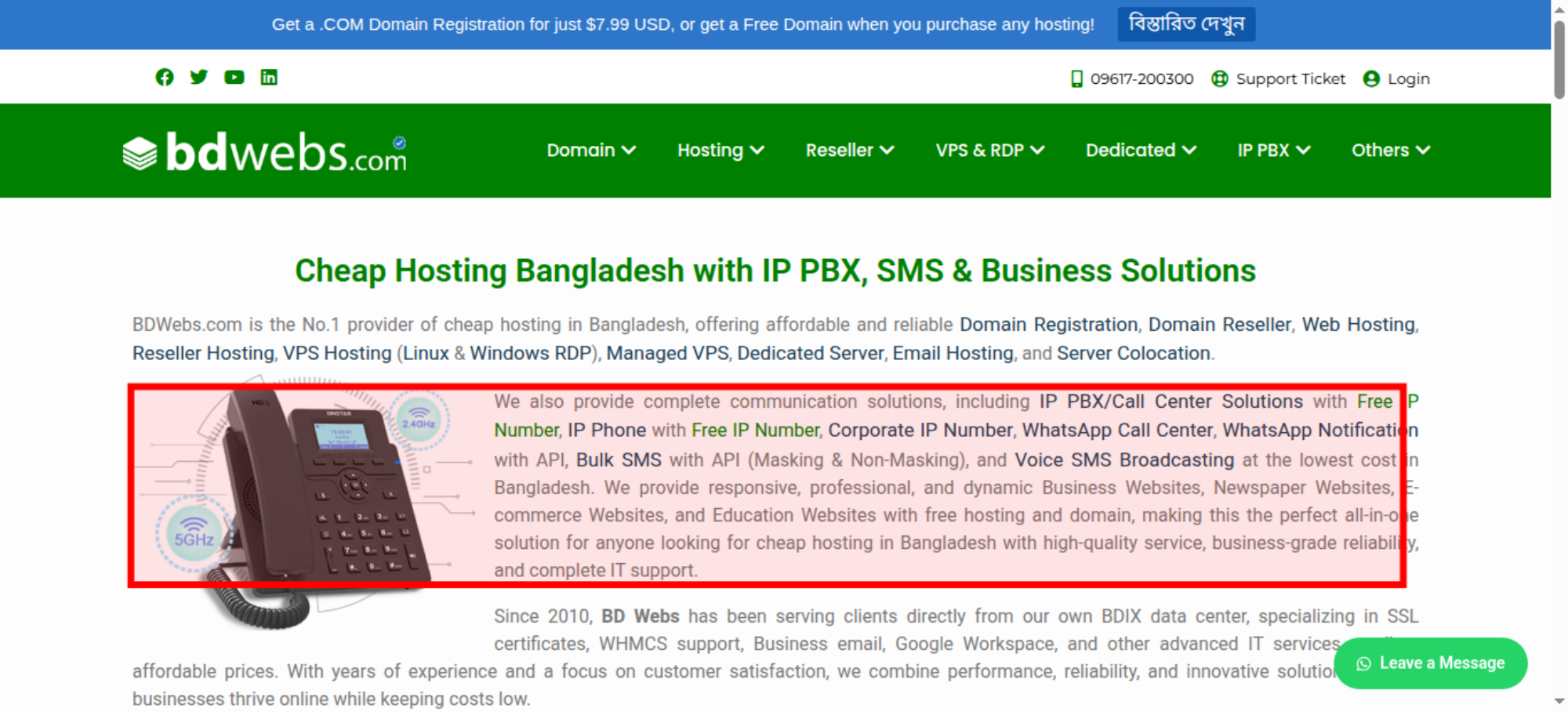
The LCP element is highlighted in the screenshot. If nothing is highlighted the element was removed before the screenshot or the LCP API couldn't find it.
How much the page's content shifts as it loads, collected via the Cumulative Layout Shift API.
Sorted by individual shift score (higher = bigger shift). The top entries usually account for most of the page's CLS.
body > div:eq(2) > div:eq(1) > section:eq(0) > div:eq(1) > div > div > div:eq(1) > div > p:eq(1) > #text:eq(9),body > div:eq(2) > div:eq(1) > section:eq(0) > div:eq(1) > div > div > div:eq(1) > div > p:eq(2) > #text:eq(1),body > div:eq(2) > header#Top_bar > div > div > div > nav,body > div:eq(2) > div:eq(1) > section:eq(0) > div:eq(1) > div > div > div:eq(1) > div > p:eq(1) > span:eq(0) > #text,body > div:eq(2) > div:eq(1) > section:eq(0) > div:eq(1) > div > div > div:eq(1) > div > p:eq(1) > a:eq(5) > #textbody > div:eq(2)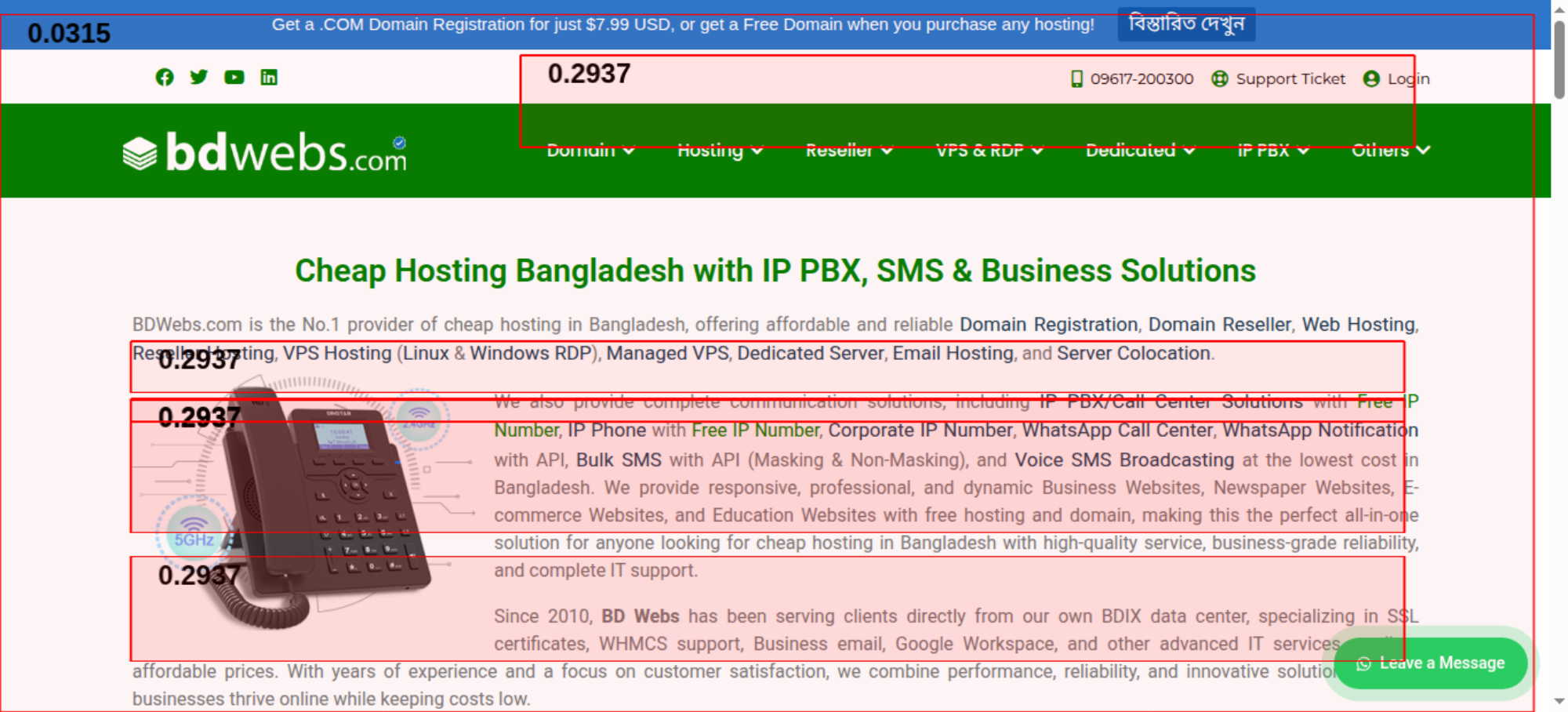
Elements that shifted by more than 0.01 are highlighted in the screenshot. If an element shifted outside the viewport, it won't appear here — check the video or filmstrip to see the shift.
Want render-blocking and recalculate-style metrics for FCP and LCP, plus CPU long tasks? Run with --cpu.
A long animation frame (LOAF) is a frame that took ≥ 50 ms from input to the next paint. The breakdown shows where that time went. Read more about the Long Animation Frames API.
Showing the top 10 longest animation frames.
No script attribution available for this frame.
No script attribution available for this frame.
No script attribution available for this frame.
There are no custom configured scripts.
There are no custom extra metrics from scripting.
How the page is built.
| Content | Header Size | Transfer Size | Content Size | Requests |
|---|---|---|---|---|
| html | 0 b | 15.1 KB | 107.5 KB | 2 |
| css | 0 b | 142.8 KB | 1.2 MB | 2 |
| javascript | 0 b | 594.5 KB | 2.1 MB | 8 |
| image | 0 b | 86.3 KB | 85.9 KB | 7 |
| font | 0 b | 575.2 KB | 574.2 KB | 28 |
| favicon | 0 b | 815 B | 1.1 KB | 1 |
| json | 0 b | 419 B | 16 B | 2 |
| plain | 0 b | 35 B | 0 b | 2 |
| Total | 0 b | 1.4 MB | 4.0 MB | 52 |
| Domain | Total download time | Transfer Size | Content Size | Requests |
|---|---|---|---|---|
| www.bdwebs.com | 9.226 s | 740.2 KB | 2.5 MB | 20 |
| fonts.googleapis.com | 346 ms | 5.1 KB | 186.0 KB | 1 |
| fonts.gstatic.com | 2.809 s | 406.0 KB | 405.2 KB | 25 |
| connect.facebook.net | 1.351 s | 263.8 KB | 967.7 KB | 3 |
| mpc-prod-25-s6uit34pua-wl.a.run.app | 671 ms | N/A | 0 b | 1 |
| www.facebook.com | 255 ms | 35 B | 0 b | 2 |
| type | min | median | max |
|---|---|---|---|
| Expires | 0 seconds | 1 year | 1 year |
| Last modified | 0 seconds | 41 weeks | 4 years |
Includes requests done after load event end.
| Content | Transfer Size | Requests |
|---|---|---|
| html | 0 b | 0 |
| css | 0 b | 0 |
| javascript | 0 b | 0 |
| image | 0 b | 0 |
| font | 0 b | 0 |
| favicon | 815 B | 1 |
| Total | 815 B | 1 |
Includes requests done after DOM content loaded.
| Content | Transfer Size | Requests |
|---|---|---|
| html | 137 B | 1 |
| css | 0 b | 0 |
| javascript | 165.8 KB | 3 |
| image | 0 b | 0 |
| font | 0 b | 0 |
| favicon | 815 B | 1 |
| json | 419 B | 2 |
| plain | 35 B | 2 |
| Total | 167.2 KB | 9 |
Render blocking information directly from Chrome.
| Blocking | In body parser blocking | Potentially blocking |
|---|---|---|
| 3 | 0 | 0 |
Third party requests categorised by Third party web version 0.29.2.
Domains that didn't match any tool in Third party web. If you are sure they are third party domains, please do a PR to that project. You can also fine tune the list using --firstParty.
Calculated using .*bdwebs.* (use --firstParty to configure).
| Content | Header Size | Transfer Size | Content Size | Requests |
|---|---|---|---|---|
| html | 0 b | 15.1 KB | 107.5 KB | 2 |
| css | 0 b | 137.7 KB | 1.0 MB | 1 |
| javascript | 0 b | 330.7 KB | 1.2 MB | 5 |
| image | 0 b | 86.3 KB | 85.9 KB | 7 |
| font | 0 b | 169.2 KB | 169.0 KB | 3 |
| favicon | 0 b | 815 B | 1.1 KB | 1 |
| json | 0 b | 419 B | 16 B | 1 |
| Total | N/A | 740.2 KB | 2.5 MB | 20 |
| Content | Header Size | Transfer Size | Content Size | Requests |
|---|---|---|---|---|
| html | 0 b | 0 b | 0 b | 0 |
| css | 0 b | 5.1 KB | 186.0 KB | 1 |
| javascript | 0 b | 263.8 KB | 967.7 KB | 3 |
| image | 0 b | 0 b | 0 b | 0 |
| font | 0 b | 406.0 KB | 405.2 KB | 25 |
| favicon | 0 b | 0 b | 0 b | 0 |
| json | 0 b | 0 b | 0 b | 1 |
| plain | 0 b | 35 B | 0 b | 2 |
| Total | N/A | 674.9 KB | 1.5 MB | 32 |